Parent Guide
Math Fact Games for Kids
Math fact games for kids help children practice basic facts in a way that feels more engaging than drills alone. For students in grades 2-5, the right game can support math fact fluency by making addition, subtraction, multiplication, and division practice easier to repeat.
The best math fact games for kids use short, repeatable practice to help children build fast recall, confidence, and accuracy without unnecessary setup or pressure.
Looking for a no-login math fact game? Meet QuestCaster.
Learn More About QuestCaster
Why Math Fact Games Matter
Math fact fluency helps students solve problems more quickly and confidently by building fast, accurate recall of basic operations. When students don’t have to stop and calculate each step, they can focus on higher-level thinking and problem solving.1 Recent research has also highlighted a growing challenge in math achievement, particularly in foundational skills like basic operations. Reports show widening gaps in math performance, reinforcing the importance of consistent, early practice.2
Short, repeated practice sessions are one of the most effective ways to build this fluency over time. By making practice engaging and easy to repeat, math fact games help students stay consistent and build confidence as they improve.3
What to Look for in a Math Fact Game
- Short, focused practice sessions
- Repetition for recall
- Engaging enough to keep kids practicing
- Covers addition, subtraction, multiplication, and division
- Easy to use, with no setup or login required
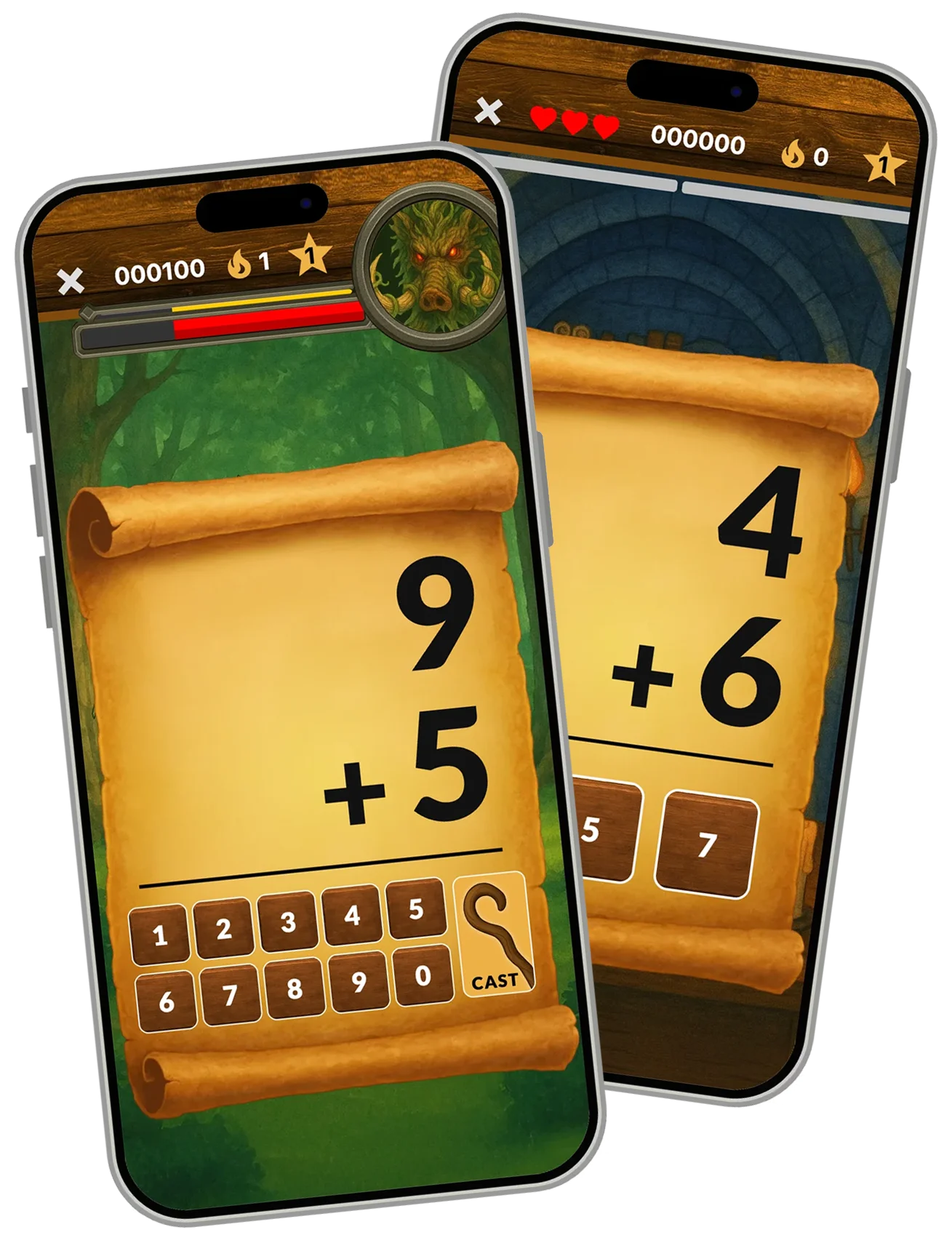
QuestCaster was built around these ideas: short rounds, repeated practice, and simple no-login setup.
Types of Math Fact Games
Worksheets and flashcards
Worksheets and flashcards are simple, inexpensive, and easy to repeat. The downside is that some kids lose interest quickly, especially when practice feels disconnected from progress.
Timed practice games
Timed games can help children work toward faster recall, but they work best after a child has had enough untimed practice. Too much pressure too soon can make math practice feel stressful.
Interactive math apps
Interactive apps can combine repetition, feedback, and motivation in one place. The best options keep sessions short, make progress clear, and avoid unnecessary setup for parents.
How Much Daily Practice is Needed?
Most children benefit from short, consistent daily math practice, especially when sessions are focused and low-pressure. Consistency matters more than long practice blocks, because repeated recall over time helps math facts become easier to remember.4
How QuestCaster Fits
If you’re looking for a simple way to help your child build math fact fluency, QuestCaster makes it easy to get started and stay consistent.
There’s no login, no personal data collection, and no setup required. Kids can jump in right away and practice through short, repeatable rounds that build speed and confidence over time.
It’s free to play and designed for quick daily practice at home or in homeschool routines.
Homeschooling? See our guide to homeschool math fact practice, or browse all of our guides.
See How QuestCaster WorksReferences:
1. What Is Math Fact Fluency and How Does It Develop?, Education Week
2. A Crisis in Math: The State of the American Student 2025, Center on Reinventing Public Education
3. Ways to Build Math Fact Fluency, ExploreLearning
4. Assisting Students Struggling with Mathematics, Institute of Education Sciences